
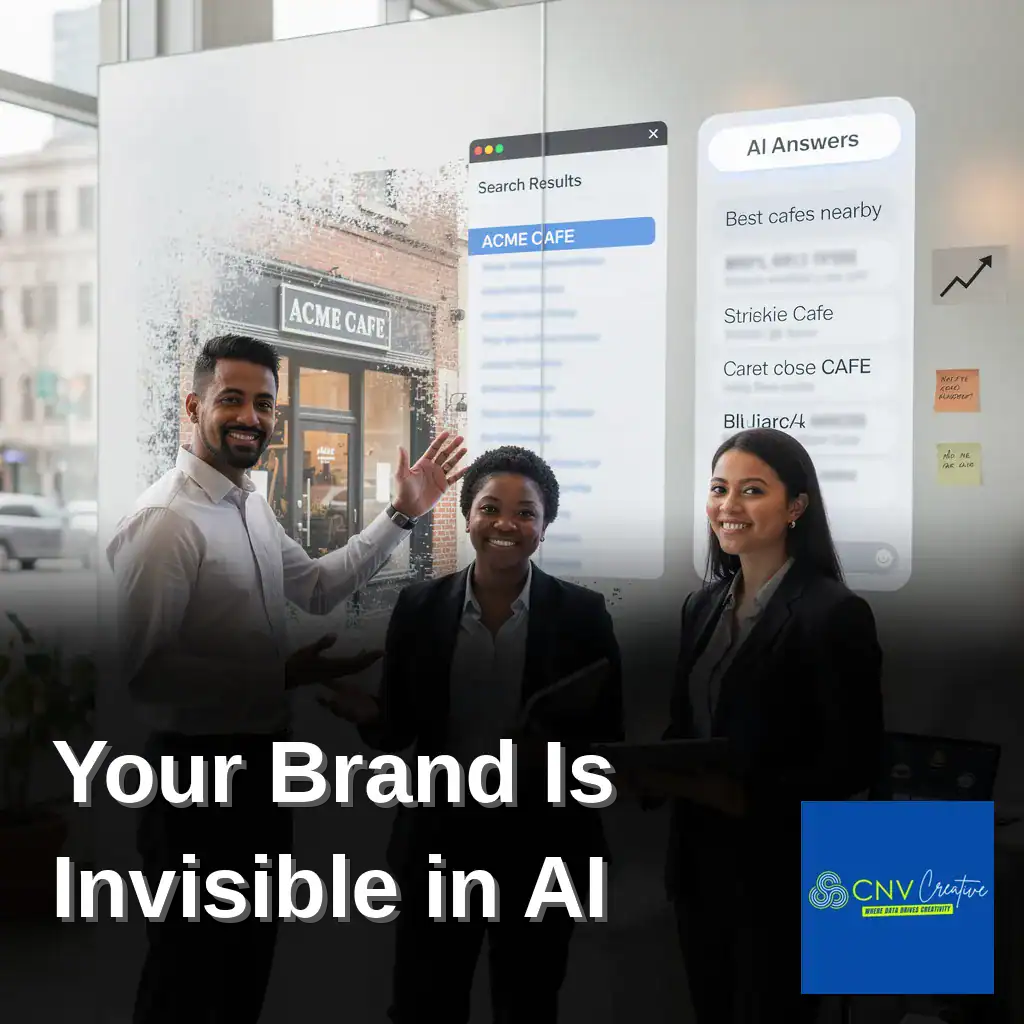


Brand invisibility in AI search happens because traditional SEO tactics don’t translate to AI citation logic. Brands ranking #1 on Google appear in ChatGPT responses only 62% of the time. Just 12% of AI citations overlap with Google’s top 10 results. Without a distinct content and authority strategy built for AI discovery, growth-stage brands simply don’t get cited.
Key Takeaways
Google’s top-ranked brands appear in ChatGPT responses only 62% of the time consistently.
AI search engines like ChatGPT, Perplexity, Gemini, and Claude now handle billions monthly searches.
Only 12% of AI citations overlap with Google’s top 10 search results today.
Traditional SEO dominance no longer guarantees visibility across fragmented AI discovery platforms.
Why Are Brands Invisible In AI Search Results?
Brands disappear from AI search because their SEO foundation was built for a different kind of engine entirely. Nearly two-thirds of brands do not show up when an AI assistant answers a customer’s question, even though almost all of them pour real budget into search, according to Media Broker Daily. That gap should alarm any founder tracking marketing spend against results.
We see this pattern play out constantly. Tracking AI visibility performance across dozens of client accounts has taught us exactly where brands drop out of AI-generated answers. The drop-off points are rarely where marketing teams expect them.
Is This Just a Ranking Problem in Disguise?
No. Traditional rankings measure where a page sits on a results page. AI visibility measures whether an assistant mentions the brand at all inside a generated answer. Those two outcomes do not move together. A page one ranking on Google carries no guarantee of a single mention in an AI response.
That distinction matters because it changes what “winning” even means. Media Broker Daily frames it directly: the AI visibility gap represents a new kind of visibility problem, one that old SEO strategy was never built to solve. Optimizing for click-through rate and keyword position addresses yesterday’s discovery channel, not today’s.
Founder-led businesses feel this gap acutely because they lack the internal bandwidth to diagnose it. We built our own industry benchmark report, the CNV AI Visibility Index, specifically to give growth-stage companies a data-driven baseline for AI transparency and governance metrics.
Three forces typically drive the disappearance:
Content structure that answer engines cannot parse or extract cleanly
Authority signals that traditional SEO rewards but AI models weight differently
Zero measurement infrastructure tracking whether the brand appears in AI answers at all
Closing that gap starts with knowing it exists.

How Is AI Search Different From Google Rankings?
Google rankings measure position on a results page. AI search measures whether a chatbot mentions a brand at all inside a generated answer, and those two outcomes rarely align. A first-page Google ranking used to guarantee visibility. That guarantee no longer holds.
The numbers make the disconnect concrete. Brands sitting on Google’s first page show up in ChatGPT responses only 62% of the time, according to a Chatoptic study reported by Topify. Worse, just 12% of AI citations overlap with Google’s top 10 organic results at all. We read that gap as the clearest signal yet that ranking algorithms and citation algorithms run on different logic.
Traditional SEO rewards keyword targeting, backlink authority, and page-one placement. Generative engine optimization (GEO) rewards something else entirely: content structured for extraction, clear factual claims, and answers a language model can elevator directly into its response. We break this distinction down in detail in our comparison of GEO versus SEO and what actually changes in local search strategy once generative AI enters the picture.
Does ranking well on Google still matter?
Ranking well still matters, but it no longer functions as insurance. We treat Google visibility and AI citation as two separate campaigns requiring separate tactics, not one strategy stretched across both.
What should founders track instead of just rank position?
Founders should start monitoring how often their brand appears inside AI Overviews and AI Mode responses, not just organic position. We explain the practical difference between these two surfaces in our breakdown of AI Overviews versus AI Mode for businesses adjusting to shifting search behavior.

What Is The AI Visibility Gap Costing You?
Lost revenue is the real cost of the AI visibility gap, not just lost traffic. AI assistants including ChatGPT, Perplexity, Gemini, and Claude now field billions of queries every month. Buyers are making decisions inside those conversations before a brand ever gets a click. Every question answered without a client’s name attached is a lead that never enters the funnel.
Search discovery has splintered. Buyers now move across traditional search engines, AI assistants, AI Overviews, and conversational tools that answer questions directly, rather than sticking to one destination. We built our strategy around this shift. Treating AI visibility as a side project guarantees invisibility at the exact moment prospects are ready to buy.
How do we know if our brand has an AI visibility problem?
Most founders find out the hard way: a competitor gets cited by name in an AI-generated answer, and their own company doesn’t appear at all. We help clients measure AI visibility using specific performance metrics and monitoring tools, replacing guesswork with a clear, trackable baseline. Without that baseline, the gap stays invisible until it shows up as a stalled pipeline.
What does closing the gap actually require?
Closing it takes more than better content. We provide direct guidance on how businesses get cited by ChatGPT and other AI assistants, structuring brand information so answer engines can find it, trust it, and repeat it.
Structured, machine-readable brand facts
Consistent entity signals across the web
Ongoing monitoring of AI citation performance
Founder-led businesses that ignore this shift risk losing ground quietly, one uncredited answer at a time.

How Do AI Assistants Choose What To Cite?
AI assistants favor content that answers questions the way people actually ask them out loud. Generic keyword phrases lose out to long-tail, conversational content built around natural speech patterns. We build our clients’ content strategy around this shift. A page stuffed with short, clipped keywords rarely earns a citation the way a page that mirrors real conversation does.
Selection doesn’t stop at phrasing, though. Technical fundamentals still carry weight behind the scenes.
What technical factors affect AI citation?
Page speed, mobile-friendliness, and schema markup all shape whether AI systems can crawl, parse, and trust a page enough to cite it. A slow or poorly structured site gets passed over, even when the content itself answers the question well. We treat these fundamentals as non-negotiable groundwork, not optional polish, for every client site we manage.
Local relevance matters just as much. Over half of voice searches focus on finding a local business. AI assistants reflect that same pattern when choosing which brands to surface. Keeping a Google Business Profile current isn’t a minor task on a checklist; it directly affects whether a growth-stage business gets named in a local AI-generated answer.
Why do competitors get cited instead of us?
Most marketing teams have no visibility into how their brand shows up inside AI-generated answers. Why a competitor keeps appearing where they don’t. That blind spot is the real problem, not a lack of effort. We help our clients close this gap by auditing citation patterns and rebuilding content around the signals AI assistants actually weigh: conversational phrasing, technical readiness, and local trust markers working together.
Can Voice And AI Search Overlap Strategically?
Yes, voice and AI search share the same foundation: structured, well-optimized content that answers questions directly. We treat them as one strategic problem, not two separate tactics competing for budget. Buyers today split their attention across platforms; Google’s own audience remains loyal but no longer exclusive. That fragmentation is exactly where the overlap pays off.
Voice search optimization means refining both website content and the technical bones of a site, things like page speed, schema markup, and mobile responsiveness, to boost visibility in spoken results. That same groundwork feeds AI search performance. Clean structure and clear answers help both a voice assistant and a chatbot pull accurate information about a brand.
Does local SEO still matter for voice search?
It does, and it matters more than most founders assume. Over half of voice searches target local businesses, which makes an updated Google Business Profile a direct lever for visibility. For growth-stage companies serving specific regions or markets, this is low-effort, high-return work.
We build this overlap into every strategy we run. Most founder-led businesses face the same bottleneck: ambition without a framework. Translating growth goals into a clear, prioritized marketing plan is hard when budget decisions happen reactively. A shared optimization approach solves two channels with one allocation.
Here’s what that shared approach typically includes:
Technical audits covering site speed, structured data, and mobile performance
Local profile management to strengthen location-based visibility
Answer-first content structure built to satisfy both spoken queries and AI-generated responses
Ongoing monitoring across search interfaces, not just Google rankings
Businesses that treat voice and AI search as one system, rather than isolated projects, protect visibility as buyer behavior keeps shifting.
What Does It Take To Get Cited By AI?
Getting cited requires a clear, coherent growth strategy that AI systems can trace back to real business outcomes, not just keyword density. We built our approach around fractional CMO leadership, giving founder-led businesses senior strategic direction without the cost of a full-time executive hire. That leadership translates ambition into a concrete execution plan, one AI models can actually follow and credit.
We back that strategy with more than a decade of experience driving growth specifically for founder-led companies. Over 10 years of hands-on work across industries taught us what separates a brand AI systems recognize from one they skip past: consistency, clarity, and measurable outcomes. Guesswork does not get cited. Track record does.
Does experience actually influence AI citations?
Yes. AI systems favor brands with demonstrable results and a consistent strategic story across channels. Our client work has produced an average ROI of 2,340%, a figure that reflects sustained, repeatable performance rather than a single lucky campaign. That kind of outcome creates the signal AI tools look for when deciding which brands to reference.
What role does client retention play?
Retention signals trust, and trust signals authority. We maintain an average client tenure of 4.3 years, which shows our strategies hold up over time instead of fading after a quarter. Sustained partnerships give AI systems a longer, more reliable pattern of results to draw from.
For founders ready to build that kind of durable presence, we offer complimentary marketing consultations. These sessions map growth objectives directly to an execution strategy built for visibility, not just rankings. We combine fractional CMO oversight with a decade of proven results to help brands earn a place inside AI-generated answers instead of disappearing behind them.
How Fast Can You Fix AI Invisibility?
Speed depends on the state of the foundation already in place. A cluttered, outdated site takes longer to fix than a clean rebuild. We run our Website in a Week service to launch professional, high-converting websites in seven days, giving AI crawlers a clean foundation to index from day one.
That timeline matters because AI assistants pull answers from structured, easy-to-parse content. A rebuilt site with clear headings, fast load times, and logical navigation gives crawlers less to untangle. Founders juggling pricing varies-pricing varies in revenue rarely have months to wait on a redesign committee. We built the seven-day model for exactly that reality.
Why does team size affect how fast this gets done?
We operate as a lean, two-person team built for direct, hands-on execution rather than layers of account managers and status meetings. Decisions happen fast because there’s no chain of approvals slowing the work down. Based in Ohio, we serve growth-stage clients nationwide without local constraints, meaning the same speed applies whether a client sits in Columbus or California.
Fixing AI invisibility involves more than a website relaunch, though. Ongoing visibility requires budgeting for the right tools and subscriptions. We break down what generative engine optimization subscriptions cost. Founders can plan AI visibility work into their marketing budget instead of guessing at it.
A realistic fix timeline looks like this:
Week 1: Website rebuild with crawlable structure and clean site architecture
Weeks 2-4: Content and technical adjustments aligned to how AI assistants extract answers
Ongoing: Budgeted GEO investment to maintain and grow citation share
Founders who want the fastest path forward should expect the technical foundation to move quickly. Visibility gains build over the following weeks.
What Should You Do Next For AI Visibility?
Two moves close the AI visibility gap: build the internal capability, or bring in a team that already has it. We spend real time weighing GEO agency vs in-house hire decisions with founder-led businesses. The wrong choice burns months a growing company doesn’t have.
The industry itself is still arguing about what’s happening. Some ask whether the era of the search engine is ending, giving way to what some now call the age of the answer engine. We think that framing understates the shift. Search hasn’t disappeared; it’s split into two systems with different rules. Most marketing teams are still optimizing for only one.
Should we hire in-house or work with an agency for AI search?
The honest answer depends on bandwidth and speed. An in-house hire builds long-term institutional knowledge but takes months to ramp up on a discipline this new. A dedicated agency brings tested frameworks immediately, which matters when competitors are already earning AI citations.
How do we start the conversation?
We keep the first step simple. Reach us directly at hello@cnvcreative.com and we’ll walk through where the gaps sit in your current strategy.
Audit first: know where your brand already appears in AI answers before building anything new
Match structure to speed: pick in-house or agency based on how fast the gap needs closing
Talk to us: our team is available Monday through Friday, 9:00 AM to 5:00 PM EST
Waiting costs more than the conversation does. Brands that delay this decision hand competitors a longer head start in a channel that’s still forming its rules.
FAQ
Why do brands become invisible in AI search?
Content structure that AI cannot parse, authority signals weighted differently than traditional SEO rewards, and zero measurement infrastructure tracking AI mentions all drive brands out of AI-generated answers.
Is AI invisibility just a Google ranking problem?
No. Google rankings measure page position. AI visibility measures whether an assistant mentions the brand inside a generated answer, a page one ranking guarantees no AI mention at all.
How does CNV Creative address AI search invisibility?
CNV Creative tracks AI visib
Conclusion
In closing, your brand’s invisibility to AI search isn’t inevitable, it’s a strategic gap waiting to be filled. The brands winning in this new landscape understand that AI-driven discovery demands intentional optimization, authoritative content, and technical precision. The path forward requires more than hoping algorithms notice you. It demands a partner who speaks both the language of search and the nuances of your business. Your visibility depends on action taken today.


